Paperless Home: Receipts: 1. Refuse

I’m working on a series to chronicle how I achieve a Paperless Home and the first project is Receipts, exciting, I know! The first step to any decluttering project is to stop adding to the problem and bringing new stuff in.  

How I deal with receipts:
1. I stop them from entering my life: Overall, I buy less stuff now. The less you shop, the fewer receipts you have to deal with. I then refuse most of the rest. More and more services are offering receipts as an option and I say “no thank you!”. Will I need the receipt in the future? If not, I refuse it. I proactively let stores and restaurants know that I don’t want receipts. It gives them feedback to rethink their default policies. I’ve never had to dispute a restaurant receipt after leaving the restaurant so I just make sure the bill looks right before I sign it and leave the extra copy.

"No Receipt" and "No Thanks" from vendors using Square.

"No Receipt" and "No Thanks" from vendors using Square.

I also like to buy from places that don't give receipts, like the farmer's market or Craigslist. Or stores that save transaction histories like Amazon or Home Depot so if I have an issue, they can look it up using my account or card. Other stores now offer to email a digital receipt; I can get an email, archive it and done! It’s searchable if I need it in the future.  

ReceiptsStacksRefuse2.jpg

Even though I’ve stopped shopping for the most part, I’m probably still offered around 70 receipts a month! More than a fifth are online or emailed, less than a fifth come home with me, so that leaves more than 40 refused per month. In the next steps, I will tackle what I do with the ones that do come home.

+ It’s actually an interesting exercise to keep track of all the receipts that enter your life for a month. It’s an insight into our spending habits as well as how many useless pieces of trash we take in. Are you up for it?

+ Remember, this is what works best for me and has helped our home stay paperless. You might need a different system, especially for taxes or business receipts, so please ask your accountant if you're unsure!

Why I’ve Stopped My Target Habit

photo 1.JPG

I’ve quit my Target habit and not only is my life still joyful, it's easier and better.

I used to shop at Target every other week, or at least once a month. I thought it was totally normal—I felt like I wasn't going too often and I (mostly) stuck to my list. Although, sometimes I'd go in for a water filter and notice another home supply that I thought I needed.

But actually I don't need anything from Target.

I have nothing against Target... it's a convenient store with an aesthetic I appreciate. However, it's also full of stuff we think we need or stuff we think will make our lives better.

We spend 71 billion dollars a year at Target and even more at similar stores. It’s as though every single American spends more than $900 per year just on household cleaning supplies and personal care items. Crazy! What if we stopped buying those things by default and saved the money and effort?

HERE'S HOW I STOPPED MY TARGET HABIT:

1. I became aware of my spending: I was worried about money after a paycut and getting sick so I decided to figure out where it was going. My little family was spending more than $100 per month on home supplies. Yikes! $100 a month on things that didn't really bring joy, that weren't priorities in my life. It was worth looking at whether these things were the “necessities” I thought they were. Clearly not, since now that number is less than $18 per month!

2. I figured out what is actually an essential: The word "essential" has become a popular marketing word, but what is actually essential is deeply personal to each of us. So instead of listening to other people and being persuaded by advertising, I began to audit our shopping cart. Is this necessary or is it solving a problem that I didn't have until the product was marketed to me? Is this something my parents thought was essential and I never questioned it for my own lifestyle? Do I need conditioner and special cleaners for every surface? What if I stopped buying media and small appliances and home decor? I was left with only the products that get used regularly and serve a need in my home.

Zero-Waste fixtures: dust rags, dish-scrubbing towels, napkins, kitchen towels and "tissues"

Zero-Waste fixtures: dust rags, dish-scrubbing towels, napkins, kitchen towels and "tissues"

3. I embraced Zero-Waste: I noticed I was still spending money on things that were disposable, so I considered healthier or less wasteful alternatives. Bea from Zero Waste Home is amazing at this and was an incredible inspiration. I stopped using almost all paper products including tissues and napkins, and reconsidered items like vitamins, garbage bags and wrapping supplies. It feels great to not be throwing away so much trash—and money along with it.

4. I used up existing items and stopped replacing them: During a spring cleaning project, I came across a lot of unused items hiding in the backs of cabinets, like hotel toiletries I was saving for guests or special occasions. I had been re-buying what was under my bathroom sink. That's ridiculous. I pulled them all out and used up or donated every last one. Once the last drop was gone, I again considered the value they were adding to my life and the answer was usually very little.

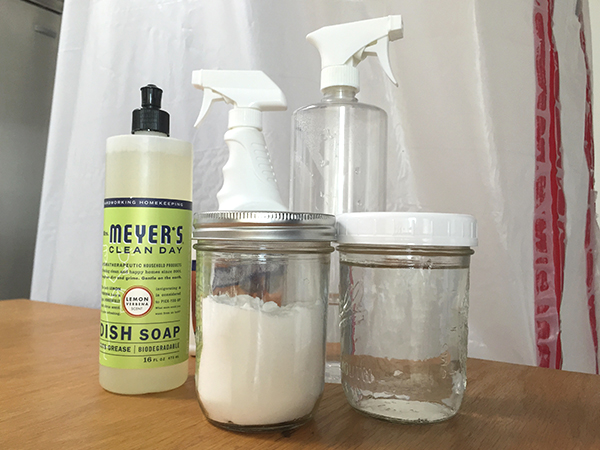
My cleaning essentials: baking soda, vinegar, dish soap, a spray bottle and floor cleaner

My cleaning essentials: baking soda, vinegar, dish soap, a spray bottle and floor cleaner

5. I switched to homemade products for a cleaner home: The first year I was sick, I developed a hypersensitivity to all kinds of chemicals and scents. Traditional shampoo would give me hives, traditional cleaning products would give me migraines. So I stopped buying bleach, deodorant, air fresheners, rinse aid, toilet cleaner, glass cleaner. I substituted these with a smaller number of simple but effective homemade products. With inspiration from Green Housekeeping and No More Dirty Looks, I can make our cleaners, deodorant, toothpaste, most of our skin products, and even some makeup. (Homemade products aren’t a deal-breaker for keeping a lean home. This lifestyle is about editing our lives and reducing consumption to truly essential items, homemade or not.)

I don’t really go to Target any more. I save a bunch of money, generate less waste, don’t buy useless stuff, and have a home that feels cleaner and healthier.

What products could you reduce or remove the need for? Do you make any of your own?